At Flickinger Glassworks, we've been crafting custom curved glass in Brooklyn for over 35 years. This guide will walk you through the essential measurements and terminology you need to know when working with bent glass.
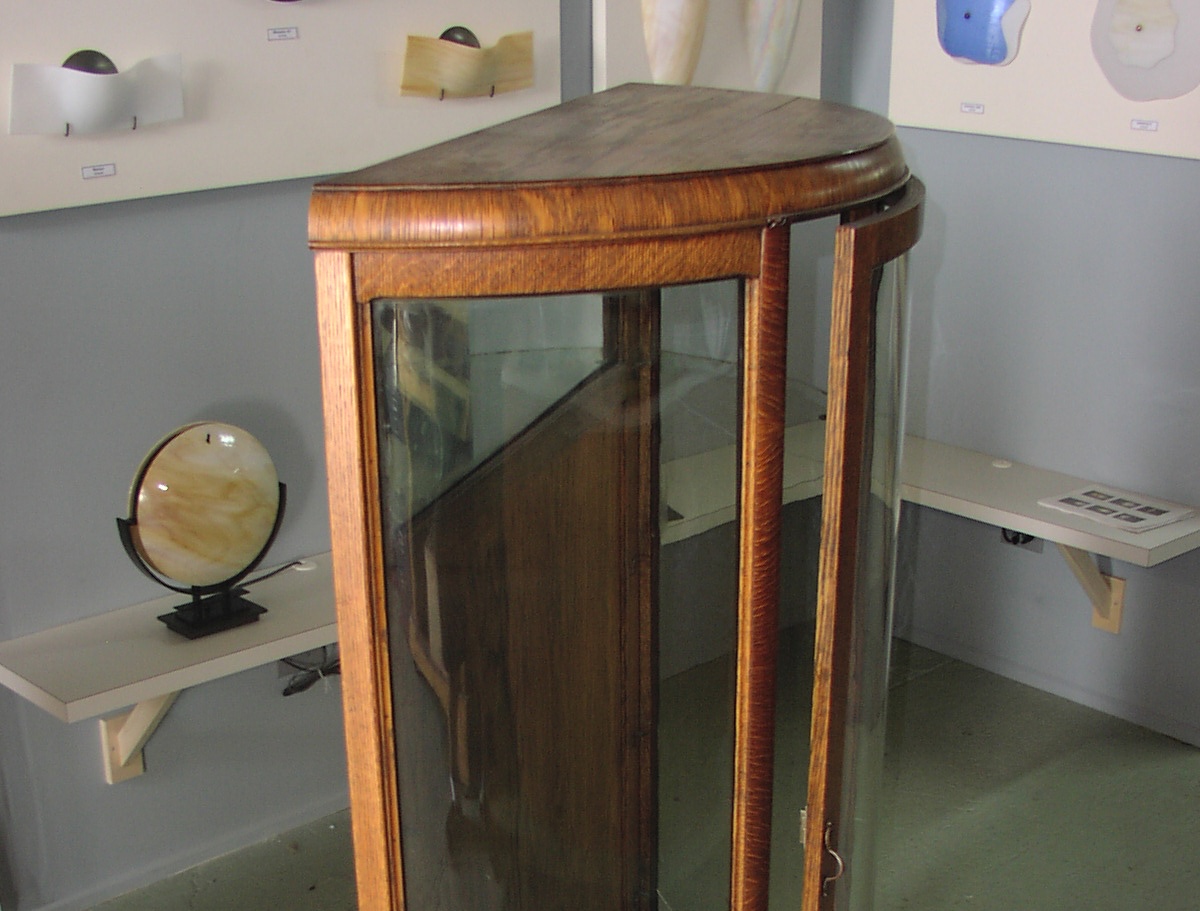
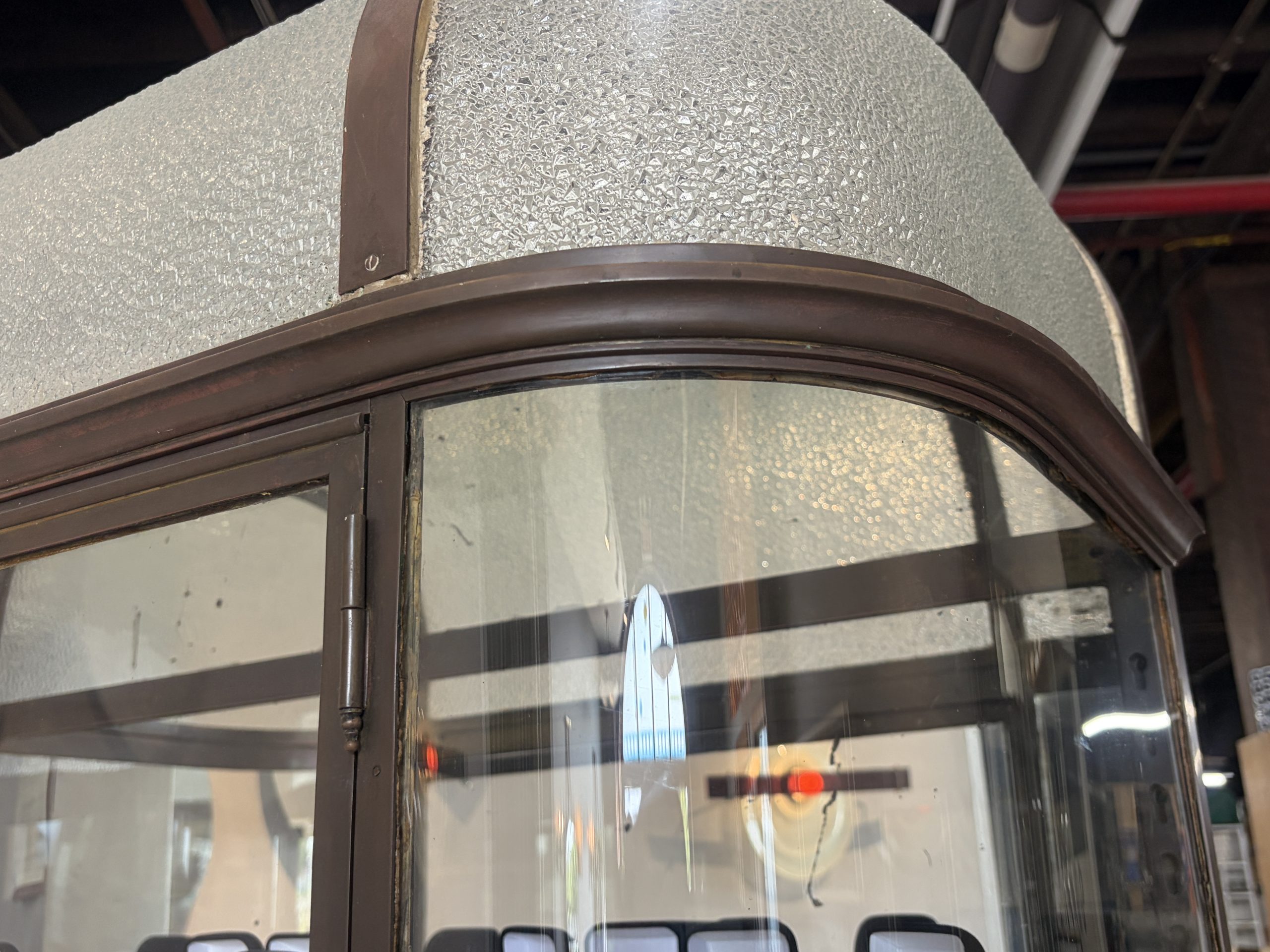
When ordering custom curved glass, precise measurements are essential for a perfect fit. Understanding bent glass geometry ensures your project succeeds the first time. Whether this be restoring vintage curio cabinets, designing architectural features, or creating custom lighting.
Pro Tip: All measurements should be taken on the outside (convex) surface of the curve!
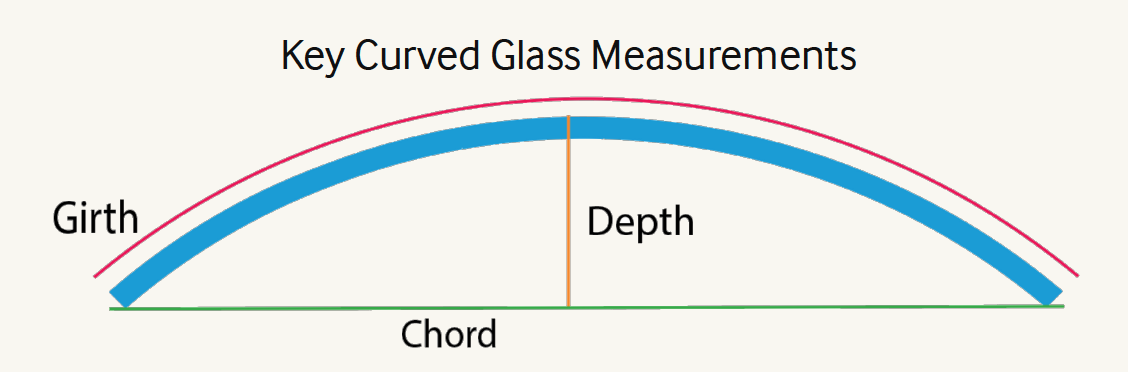
Every piece of curved glass requires specific measurements to ensure proper fabrication. Here are the key dimensions you’ll need:


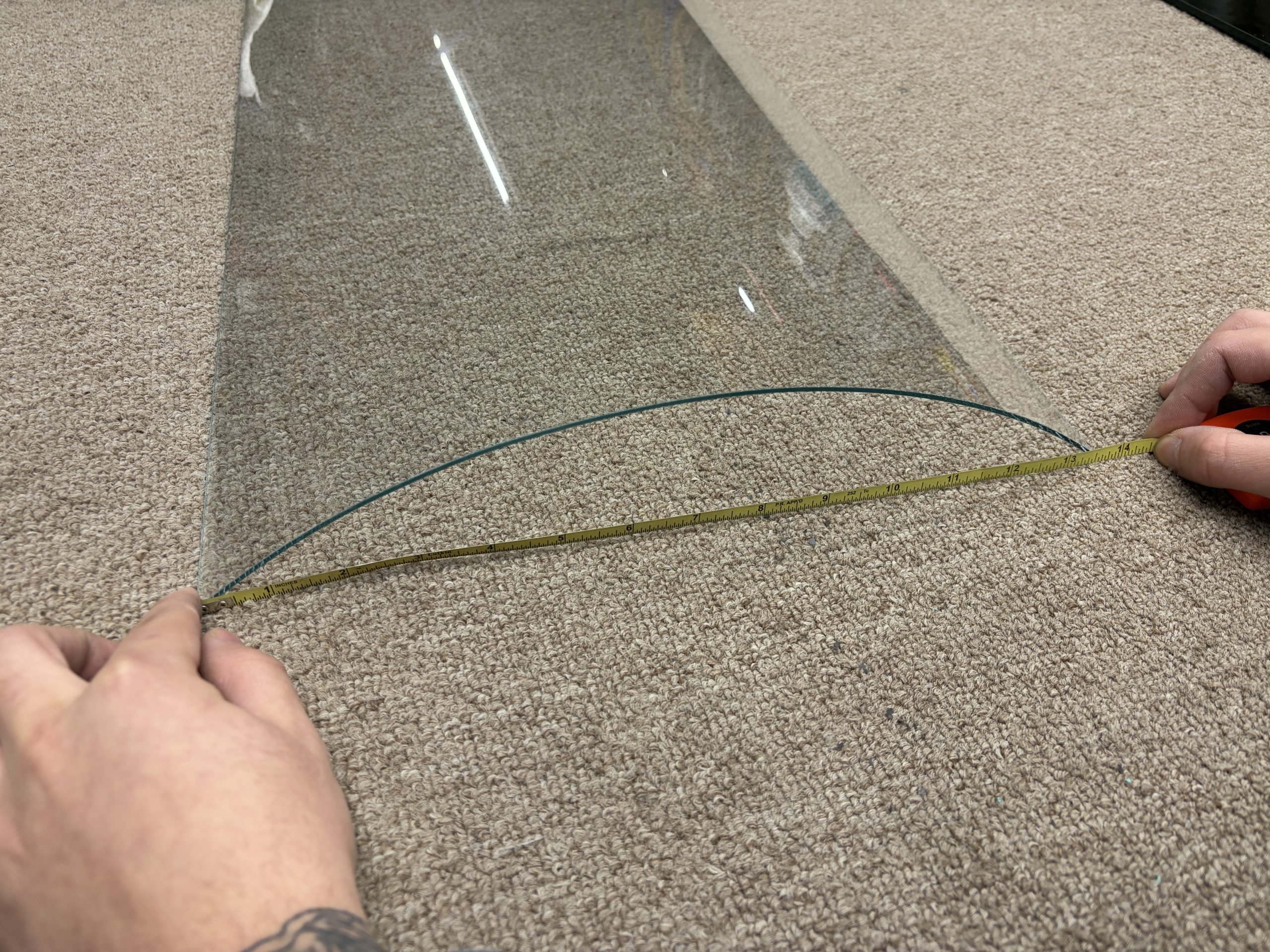
The chord is the straight-line distance between the two endpoints of your curve. Think of it as the “base” of your curve – the shortest distance across the bottom of the arc.
How to measure: Stretch your measuring tape in a straight line between the two endpoints of the curve on the convex (outside) edge of the glass and record the distance.

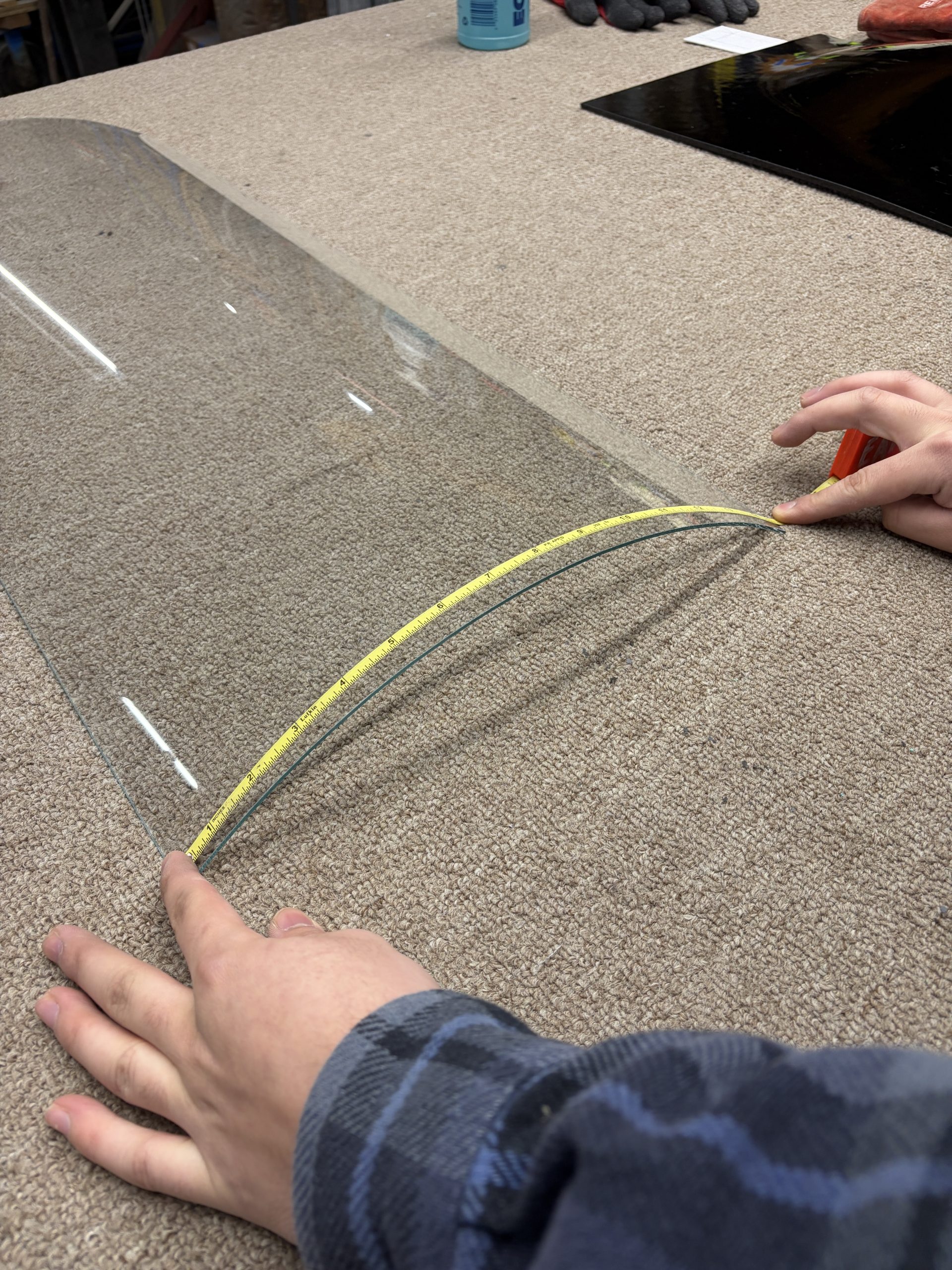
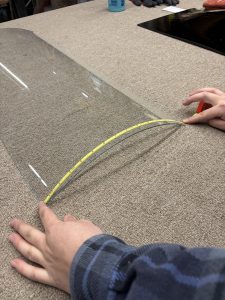
The girth, also called arc length, is the measurement that follows the actual curved face of the glass. This can be measured with a flexible measuring tape or using the string method.
How to measure:

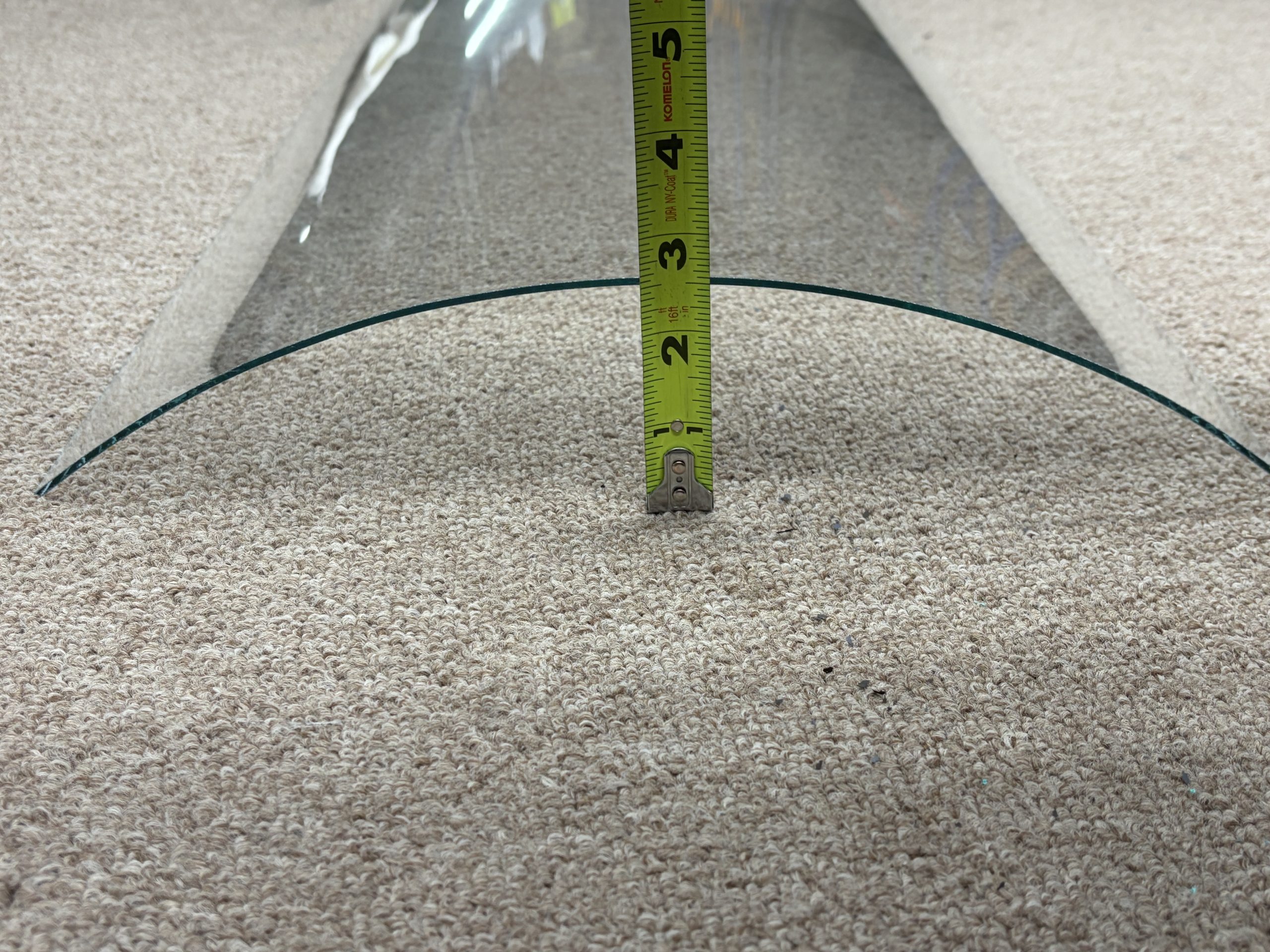
The depth is the distance from the center of the chord to the highest point of the curve. This measurement tells us how pronounced your curve is.
How to measure: Using your measuring tape, measure from the chord line straight up to the highest point of the convex (outside) edge of the glass.
This is the overall length of your glass piece, running perpendicular to the chord/width. For most applications, this represents how tall your finished piece will be.
Always specify the thickness of glass you need, typically measured in fractions of an inch (1/8″, 3/16″, 1/4″, 3/8″, etc.).
Curves are often described in degrees. A complete circle equals 360 degrees, so:
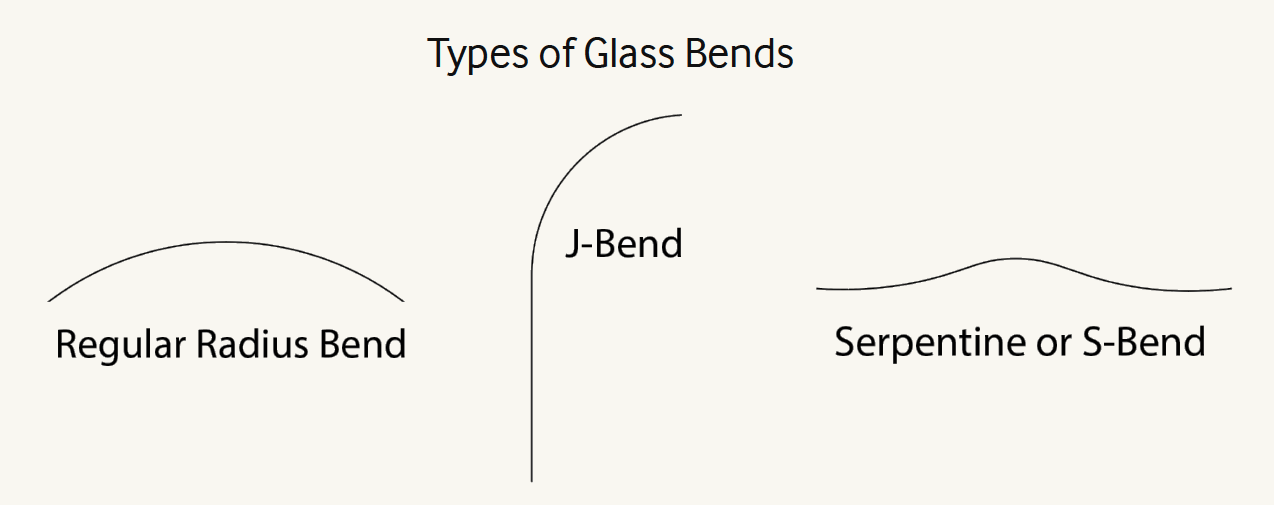
Types of Glass Bends We Fabricate


A simple, consistent curve following a single radius. Most common for curio cabinets, display cases, and architectural features.

A curve that includes both a curved section and a straight section at a 90-degree angle, resembling the letter “J”.

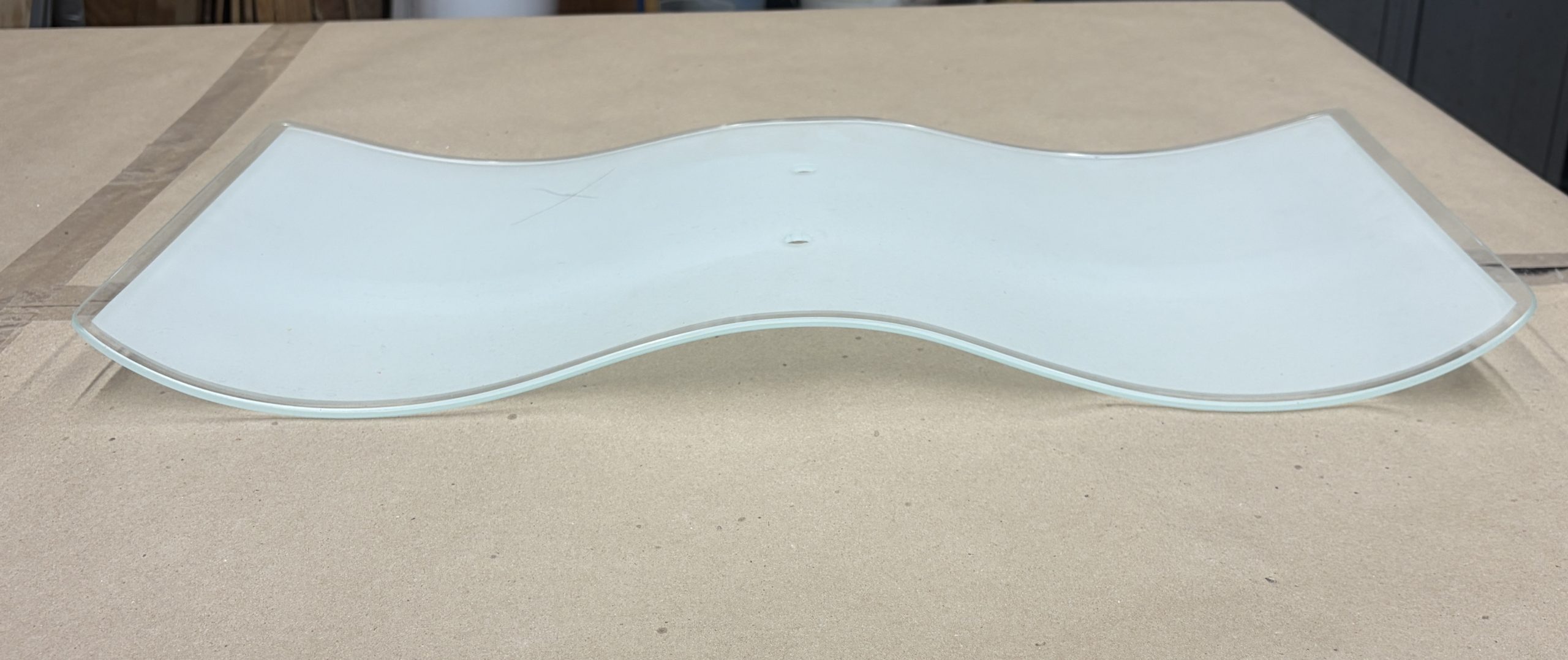
A compound curve that changes direction, creating an S-shaped profile. Often used in decorative applications and modern architecture.
For pieces with multiple curves or changing directions, each curve section should be measured separately using the same techniques outlined above.

All measurements should be taken from the outside (convex) surface of the curve for consistency and accuracy in fabrication.
Take each measurement twice to ensure accuracy. A small error in measurement can result in glass that doesn’t fit properly.
For complex curves or when precision is critical, creating a physical template ensures the most accurate results:
If your project involves:
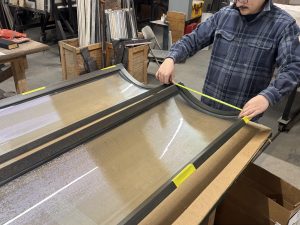
For curio cabinets and furniture restoration, we offer a convenient service where you can bring your cabinet door frames directly to our Brooklyn workshop. We’ll use the actual frame as our template, ensuring a perfect fit every time. We can also handle the installation process, giving you a complete solution from measurement to finished installation.

This eliminates measurement errors entirely and is especially valuable for:
With over 35 years of experience crafting custom curved glass in Brooklyn, we understand that every project is unique. Our artisans use time-honored techniques combined with modern precision to create curved glass that meets exact specifications.
Ready to get started? Contact us with your measurements or questions:
Whether you’re working on a historic restoration, custom furniture piece, or architectural installation, our team is here to help bring your vision to life with precision-crafted curved glass.
For step-by-step instructions on creating a physical template for complex curves, see our Template Creation Guide.